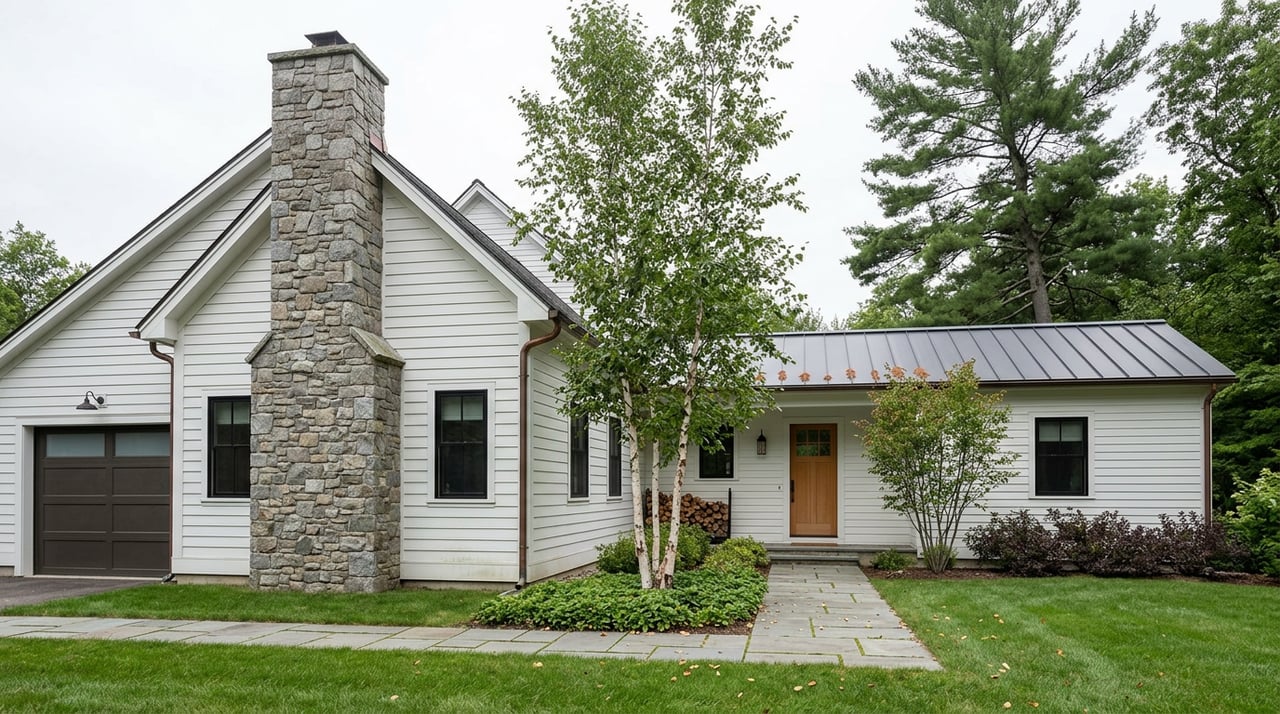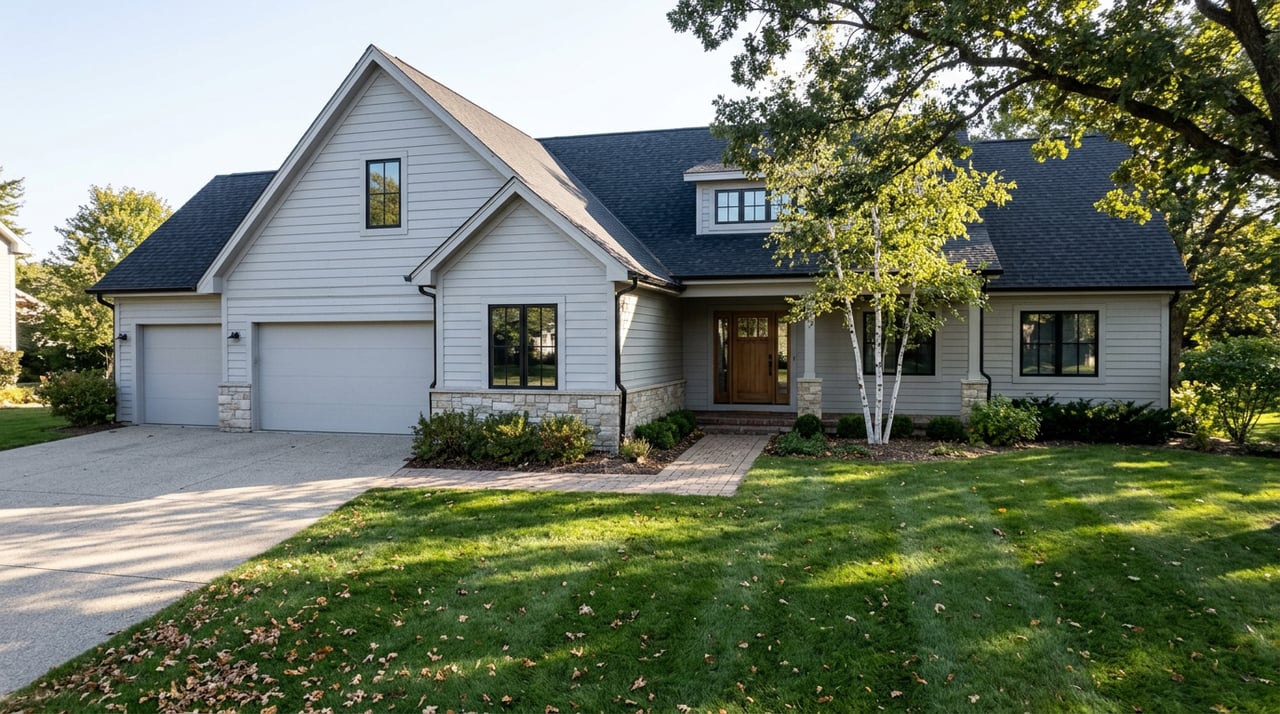
If you bought a house on Hannah Avenue NW this year, would you have known you were signing up to help pay for the street outside it?
Most buyers find out the answer at the closing table, when a line item shows up on the settlement statement that nobody mentioned during the showing. It is not a fee tied to the sale. It is a fee tied to the parcel, and in Bemidji right now, a lot of parcels are carrying one.
Over the past year, the Bemidji City Council has approved a run of street reconstruction projects that come with a special assessment attached to every property that touches the work. These are not hypothetical future costs. They are active, dollar-specific charges on named streets, and they follow whoever owns the property when the bill comes due, not whoever owned it when the project was approved.
What's Actually on the Bill
Bemidji's assessment formula is consistent across projects, which makes it easy to understand once you see two of them side by side.
| Project | Streets | Rate per linear foot | Utility service charges | Total assessed to owners |
|---|---|---|---|---|
| Hannah Ave NW / Norton Ave NW / 14th St NW / Taft Ave NE / Mill St NE | Five-street reconstruction | $45 | $1,070 sewer + $1,070 water | $305,080 |
| Park Avenue NW | Single-street reconstruction | $45 | $1,070 sewer + $1,070 water | $139,983 |
A separate 2026 project on Eleventh Street NW, 10th Street NW, and Jeannette Avenue NW carries the same $45 per linear foot rate, though a stretch of Eleventh Street was assessed back in 1988 at $15 per foot, so the city reduced the new charge on that segment to $30 to account for what those owners already paid. Corner lots get assessed for half their frontage rather than the full amount, since they only face one side of the project. None of this is guesswork. It is what the city engineer's office put in front of the council, and what the council approved on the record.
Here is the part that catches people off guard: none of these numbers are hypothetical anymore. The five-street project and Park Avenue NW already went through construction and a final assessment hearing. The Eleventh Street corridor gets its hearing in January and construction runs May through October 2026. If you are looking at a house on any of these streets, or one nearby that could be added to a future phase, the assessment is not a maybe. It is either already levied or close to it.
The Legal Mechanism Nobody Explains at the Showing
Under Minnesota law, a special assessment becomes a lien on the property the day the city council adopts it, and that lien runs concurrent with general property taxes for up to 30 years unless the resolution says otherwise. It does not attach to the person who owned the house when the council voted. It attaches to the parcel, which means it transfers with the deed to whoever buys the property next, regardless of who benefited from the new curb and gutter.
This is why the purchase agreement matters more than most buyers realize. Minnesota transactions require the agreement to spell out whether the seller pays off the remaining assessment balance at closing or the buyer takes over the remaining installments. There is no default rule that automatically protects a buyer from an assessment they never asked for. If the purchase agreement is silent or vague on this point, the buyer can end up assuming a debt that has nothing to do with anything they chose to improve.
The state's own assessment notice requirements make this traceable. When a city adopts an assessment, the mailed notice to the property owner has to state the amount charged to that specific parcel, the prepayment rights, any interest-free window, the interest rate, and the appeal process. That paperwork exists precisely because these charges are legally distinct from the sale itself. They are a public improvement lien, and the county records them the same way it records the mortgage.
Why the Financing Choice Changes What You're Actually Buying
On the five-street project, the city gave owners a choice: pay the assessment in full, or finance it over 15, 20, 25, or 30 years at a fixed 4.4 percent interest rate. The rate does not change based on how long you stretch the payments. Only the total interest paid changes.
That matters for a seller deciding how to price a listing and for a buyer deciding what "assuming the assessment" actually costs. A remaining balance financed over 30 years at 4.4 percent is a materially different number than the same balance paid off today, even though the principal on the settlement statement looks identical. Two houses on the same block, assessed the same amount, can carry very different total costs depending on which financing term the previous owner chose and how many years are left on it.
The council's own debate over these terms is worth knowing about, because it shows how seriously the city treats hardship requests versus rate changes. After a windstorm caused widespread damage in June, some residents asked the council to lower the assessment itself. The council declined to change the $45 per foot rate, which one council member noted had been in place for three or four years, but did extend the financing window to ease the timing. In other words, the amount owed is fixed. Only how you pay it is flexible.
The Timing Detail That Makes This More Than a One-Off
Hannah Avenue NW is not just freshly assessed. It is also slated as one of the official detour roads for the state's Highway 197 reconstruction, a multi-year project bringing roundabouts and new sidewalks to the corridor through 2026 and into 2027. That means a homeowner on that stretch is paying down a lien for the street they live on while that same street carries extra detour traffic for the better part of two construction seasons.
It also signals something for buyers looking a few blocks over. If the city is actively reconstructing streets that intersect with a major state highway project, more corridors near that intersection are reasonable candidates for the next assessment cycle. A quiet residential street today does not tell you what it will cost to own in three years.
What to Actually Ask Before You Write or Accept an Offer
A few direct questions can settle this before it becomes a surprise at the closing table.
- Ask the City Engineer's office whether the property has a pending, active, or recently completed special assessment, and what the current payoff balance is. Bemidji's engineering department can be reached at 218-333-1851.
- If there is a balance, ask which financing term is attached to it and how many years remain, since that determines the real cost, not just the principal.
- Make sure the purchase agreement states plainly whether the seller is paying off the assessment at closing or the buyer is assuming the remaining installments. Silence on this point is not neutral. It is a risk for whoever assumes it lands on them.
- If the lot is a corner lot, confirm the frontage calculation, since corner properties are only assessed for half their frontage and that should show up correctly in any payoff figure you are quoted.
- If the street sits near an active state or city infrastructure project, ask whether nearby streets have been discussed for future phases. City council meeting records are public and searchable through the city's website.
A Few Questions Worth Asking
Does a special assessment show up in a title search? Yes. Because it is recorded as a lien concurrent with property taxes, a title company doing a standard search should identify it, which is one more reason to confirm the payoff amount before finalizing a purchase agreement rather than after.
Can the balance be paid off early instead of financed? State law requires the assessment notice to include prepayment rights and any interest-free window, so early payoff is generally an option. The specific terms depend on the individual assessment resolution, which is why confirming directly with the city's office matters more than assuming.
Is the $45 per foot rate likely to change soon? The council has kept that rate steady for several years even while declining to lower it after storm damage, so it has held roughly consistent. That said, rates are set project by project, so the only reliable number for a specific property is the one confirmed for that parcel.
None of this makes buying or selling on an assessed street a bad decision. New curb, gutter, and updated water and sewer mains are real improvements, and the cost is public, calculable, and negotiable in the purchase agreement. The mistake is not knowing the number exists until it shows up at closing.
If you are weighing a purchase near one of these corridors, or getting ready to list a home that may carry a remaining balance, I would rather walk through the specific parcel with you now than have either of us find out the number at the closing table. Reach out to Crystal Lakes Real Estate and let's connect.