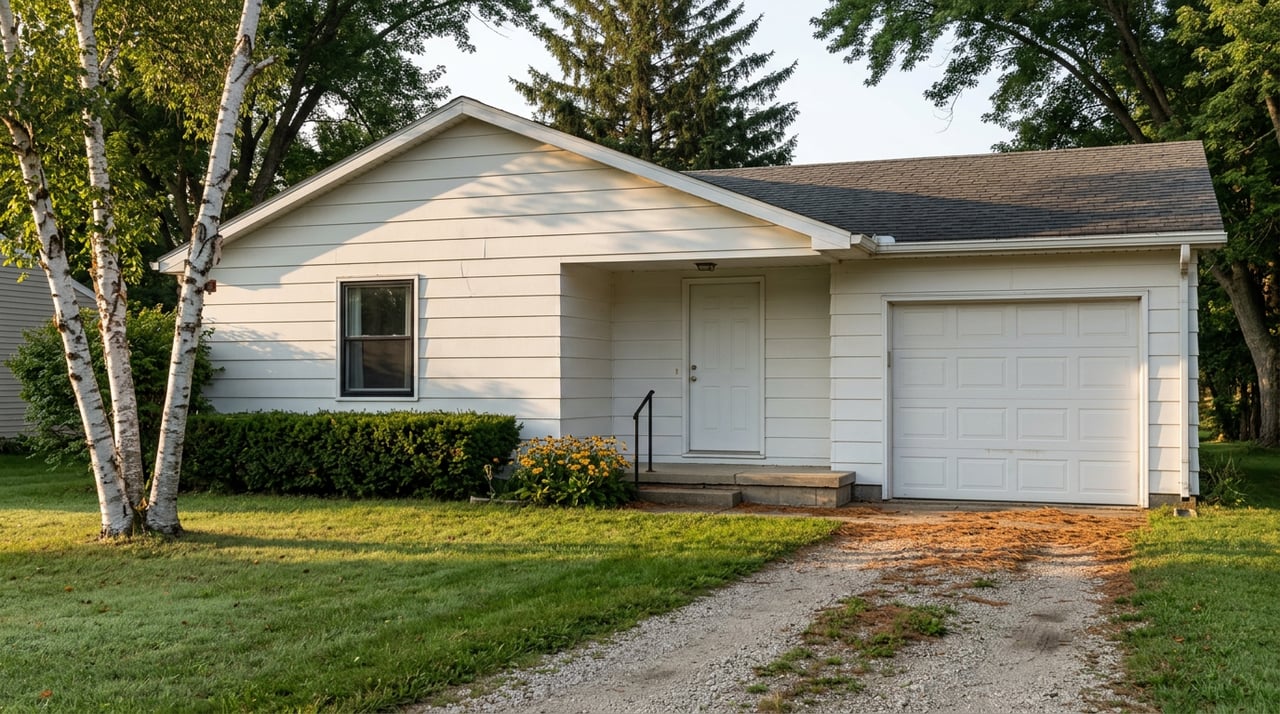
If you asked most sellers in Beltrami County what gets checked before their house changes hands, they would probably say the septic system and the well in the same breath, like they are one inspection. They are not. One of them is a legal requirement written into county ordinance. The other is something your lender might ask for, or might not, depending entirely on how you are financing the deal.
That gap between what people assume and what the law actually requires is where closings get delayed, offers get renegotiated, and sellers get surprised by a phone call from a septic inspector they did not know they needed to hire.
The assumption almost every seller walks in with
Most rural and lakeshore properties around Bemidji run on a private septic system and a private well, often installed decades apart by different contractors, inspected by different people, and governed by entirely different sets of rules. Because they sit a few feet apart in the yard, sellers tend to treat them as a package. In a transaction, they are not.
Beltrami County requires a septic compliance inspection at the time of property transfer. That requirement comes from the county's own Subsurface Sewage Treatment System ordinance, and it is not a soft recommendation. It is one of three specific events that trigger a mandatory inspection: a property changing hands, a building permit application being submitted, or an existing system being repaired or put back into use.
Minnesota state law takes a different approach to wells. A seller must disclose the number, location, and status of any wells on the property under Minnesota Statute 103I.235, but the law does not require that the water actually be tested before the sale closes. That distinction rarely comes up until someone is sitting at the closing table asking why the water report they expected never showed up.
What Beltrami County's septic inspection actually checks
The county's Environmental Services Department, based at 701 Minnesota Ave NW in Bemidji, oversees this under Ordinance 32. A state-licensed inspector reviews three things: whether the system is leaking to the surface or backing up into the home, whether there is at least three feet of soil separation between the bottom of the system and the limiting soil layer, and whether the tank itself is water-tight and structurally sound.
A passing result is not permanent. A compliance certificate holds for three years on an existing system and five years on a newly installed one, which means a septic system that passed cleanly in 2023 could already be due for a fresh look before it changes hands again in 2026.
If the inspection turns up a problem, what happens next depends on how serious it is. A system flagged as an imminent threat to public health has to be pumped within 48 hours and run as a holding tank until it is fixed. A system that is simply out of compliance, without that immediate risk, gives the owner twelve months to upgrade, repair, replace, or abandon it. Either way, the clock starts the moment the inspection report comes back, not whenever it is convenient for a closing date.
The well next to it plays by different rules
Here is where the asymmetry shows up in practice. Minnesota does not mandate a water test at the time of sale statewide. What actually gets a well tested is almost always the lender, not the county or the state. Many loan programs, including FHA, VA, and Rural Development financing, require a water sample collected by an uninterested third party, typically a plumber, well driller, or home inspector, before they will approve the loan.
That means two nearly identical properties can go through very different processes depending on how the buyer is paying. A cash buyer or someone with a conventional loan may never see a water test required at all. A buyer using VA or USDA financing, which shows up often in a market with as many veteran buyers as this one, will have that test built into the process by default.
It is worth knowing that this is not universal across Minnesota either. Dakota County, for example, has gone further than the state minimum and requires well testing at every property transfer regardless of financing. Beltrami County has not adopted that standard, which means the responsibility here sits more with the buyer's loan type and less with a blanket local rule.
Here is the difference laid out side by side:
| Septic System | Private Well | |
|---|---|---|
| Inspection required at sale? | Yes, countywide, under Ordinance 32 | No statewide requirement |
| Who requires it | Beltrami County Environmental Services | Often the lender, not the county |
| What triggers it | Property transfer, building permit, system reuse or repair | Loan type (FHA, VA, USDA commonly require testing) |
| Certificate validity | 3 years existing system, 5 years new system | No certificate; testing is a one-time snapshot |
| What happens if it fails | 48-hour pump-out if imminent threat, 12 months to fix otherwise | Negotiated between buyer and seller, no fixed timeline in statute |
Where this actually catches people mid-transaction
The friction shows up in a few predictable spots. A seller lists a lake property assuming both systems will be checked together, then learns midway through the transaction that the well was never tested because the buyer is paying cash. A buyer assumes a clean septic certificate means the whole water and waste system is sound, when the certificate only speaks to the septic side. An agent unfamiliar with the county ordinance schedules a closing date without leaving room for the septic inspection to come back, which can take longer than expected if the inspector has to be scheduled around a busy season.
The other quiet cost is that older rural properties sometimes have no well records at all. If a seller cannot produce a well disclosure certificate or any history of testing, that is worth surfacing early rather than at the closing table, since it shapes how a buyer and their lender think about the property.
Who actually does this work locally
Beltrami County maintains its own list of licensed septic professionals, and it includes names that show up on a lot of local compliance reports: Winterberger Inspections out of Osage, Wagner Plumbing & Heating and Wes Plumbing & Heating in Bemidji, and A1 Backhoe & Septic Service, run by Travis Yerbich, who is licensed as a designer, installer, maintainer, and inspector. Bemidji Sewer & Waterworks, based in nearby Hines, has served Bemidji and Blackduck for more than two decades and specifically offers pre-sale septic inspections alongside its well and water services, which makes it one of the few local companies that can speak to both sides of the property at once.
Pumping costs in the county typically run $300 to $600 as of mid-2026, depending on tank size and how far out the property sits. That is a useful number to know before an inspection comes back with a pump-out requirement, so it does not feel like an unplanned expense on top of everything else.
What this means if you are getting ready to list or make an offer
If you are selling a rural or lakeshore property here, the septic inspection is not optional and it is worth scheduling early, especially if your existing certificate is close to its three or five year mark. If you are buying, ask directly whether a well test is part of your loan requirements, and if it is not, decide whether you want one done anyway. A test costs far less than discovering a water quality issue after you have moved in.
Either way, the conversation is worth having before an offer is written, not after an inspector's report lands with less time on the clock than anyone expected.
A few questions worth asking
Does every property in Beltrami County need a septic inspection to sell? Yes, a compliance inspection is required whenever a property transfers, regardless of the system's age, as long as it is on a private septic system rather than municipal sewer.
If my septic system passed inspection two years ago, do I need a new one to sell? It depends on the type. An existing system's certificate holds for three years, and a newly installed system's holds for five, so check the date on your last compliance report before assuming you are covered.
Will my well automatically get tested when I sell? Not automatically. Minnesota requires disclosure of the well's location and status, but testing is generally driven by the buyer's loan program rather than a state or county mandate.
Buying or selling a property with its own septic and well system in Bemidji, Park Rapids, or anywhere else in Beltrami County comes with a few more moving parts than a typical in-town sale, and knowing which parts are required by law and which depend on your financing can save real time on the calendar. If you are thinking through a purchase or a listing and want to talk through what applies to your specific property, Mona Carter is happy to walk through it with you. Let's Connect.