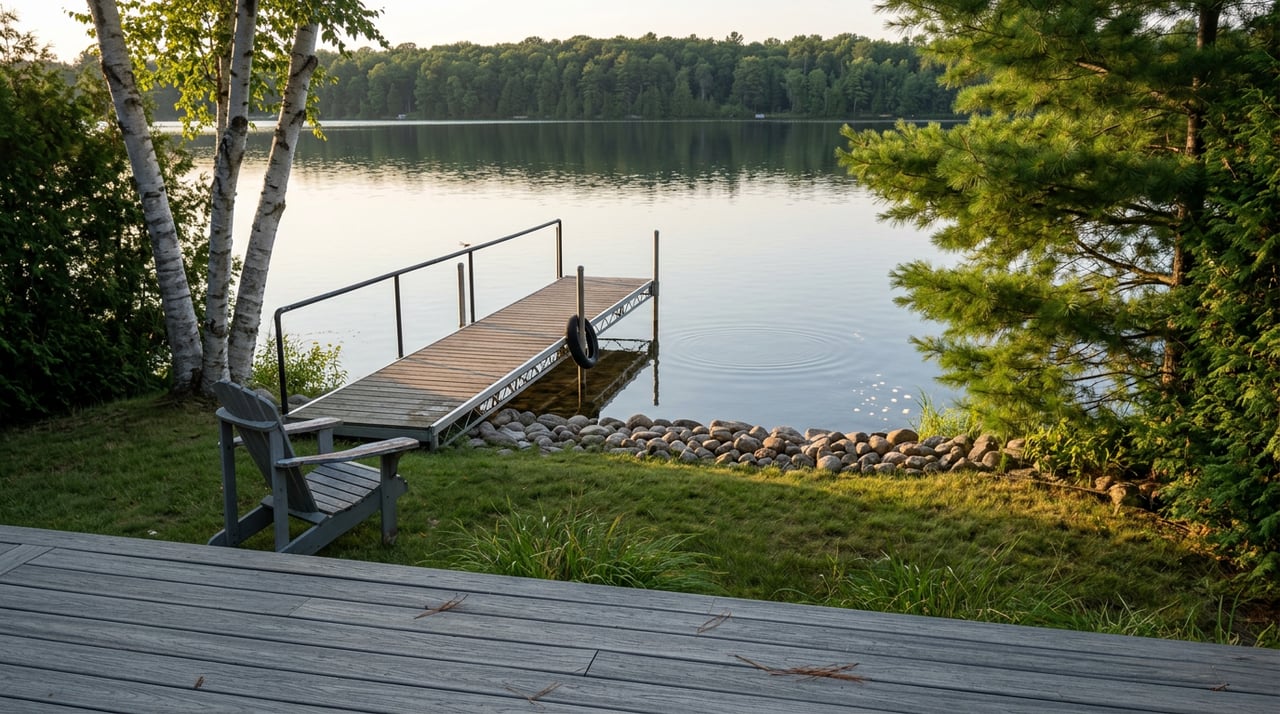
The Bemidji Pioneer reported that in February 2022, a Beltrami County judge settled a fight that had been simmering for years over a stretch of shoreline on Black Lake, about 13 miles north of Bemidji in Turtle Lake Township. The dispute centered on whether the township had improperly widened a road running past the lake, and whether that road gave the public a legal way to launch a boat where it crossed Black Creek Lane. The report quoted the judge's ruling bluntly: "No lawful public access to Black Lake exists." The township was ordered to post signs saying so, and warning that anyone who tried anyway would be prosecuted.
That case matters to more than the handful of families who live on Black Lake. It's the clearest proof of something buyers searching for a lake property around Bemidji tend to assume away: the phrase "lake access" is not a discount version of lakefront. It's a legal category, and depending on the paperwork, it can mean anything from a rock-solid deeded right to a dock, all the way down to nothing enforceable at all.
The Word Doing All the Work in the Listing
Minnesota's water law starts from a simple idea that surprises a lot of newcomers: the Minnesota Department of Natural Resources says the state does not own a public strip around every lake. Access to water runs through private property or it runs through public property, and there is no in-between.
Everything else is built on top of that baseline. Dahle Law explains that Minnesota lake access easements can be created by deed or by 15 years of continuous, open use of someone else's land to reach the water. The specific terms of an access document matter.
What "Access" Gets You, At a Glance
| Type of access | What it usually means | What to verify before you write an offer |
|---|---|---|
| True lakefront (riparian) | The property has shoreline on the lake | County shoreland setbacks and impervious surface limits that apply to your specific lot |
| Deeded or exclusive access | Access through a deed or easement | The exact language in the deed, plus who pays for maintenance |
| Shared or easement access | Access shared by multiple properties | How many households share it and whether docking or mooring is included |
| No legal access | Nearby water, but no access to it | Whether you'd be relying on a neighbor's permission, |
The Number That Should Make You Pause
Here's where the market data gets interesting. A check of Bemidji-area waterfront listings in late May 2026 put the median list price at $235,000. A separate pull of all new Bemidji listings in early August 2026 showed a citywide median of $270,000, with homes spending about 53 days on market and 22 sales closing in the trailing month.
Sit with that for a second. Waterfront homes came in under the general market median. If you assumed "on the water" automatically means "costs more," that number contradicts you.
The explanation isn't that lakefront is cheap in Bemidji. It's that "waterfront" as a search filter sweeps together everything from a modest cabin with shared easement access on a small chain lake to a seven-figure estate with true frontage on Lake Bemidji or Turtle River Lake. One listing on Turtle River Lake, for example, carried roughly 730 feet of true frontage on 5.58 acres and a list price of $1.285 million. Another home on the same lake offered about 300 feet of level, walkable shoreline on three acres, a very different proposition at a very different price point. Both get called "Turtle River Lake." Neither the word "waterfront" nor the median tells you which one you're looking at. Only the deed does.
What This Looks Like on the Water Here
Beltrami County has somewhere between 300 and 350 public lakes, but only about 100 of them have a developed public access point maintained by the DNR, according to a DNR area fisheries supervisor based in Bemidji. That gap is the whole reason deeded and easement access exist in the first place: on the other 200-plus lakes, if you're not buying true lakefront and there's no public boat launch, someone's private arrangement is the only way in.
The Turtle River Chain northeast of Bemidji is a good example of how varied that can get even within one connected system. Big Turtle Lake runs about 1,600 acres, Little Turtle about 650, and Movil Lake roughly 900, with Beltrami and Fox Lakes also tied into the chain, altogether wrapped in about 11.5 miles of shoreline according to a local outfitter that runs boat rentals on the chain. A property on Big Turtle with 750 feet of lakeshore and a private dock sits directly on the water. A back lot two roads over with a shared landing on the same chain offers another way onto the water.
The Cass Lake Chain, roughly 25,000 acres to the west, shows the same pattern. One recent listing on Wolf Lake, part of that chain, offered nearly four private acres and over 100 feet of hard, sandy-bottom shoreline with direct boat access to the full chain, described as an unusually affordable way onto water that's typically priced much higher.
Owning the frontage outright doesn't always mean unrestricted use either. On Little Bass Lake, a 347-acre lake with an average depth of five feet, shoreline owners formed an association decades ago and petitioned the DNR to cap boat motors, eventually settling on a 10-horsepower limit, as the Bemidji Pioneer reported. The Bemidji Pioneer reported that Gallagher Lake, by contrast, is privately owned with no public access at all, and county commissioners have openly debated how much business it is of theirs to regulate a lake the public can't even reach. Both cases show why it is worth checking the rules for a specific lake, not just the deed.
Before You Write the Offer
A few concrete steps protect you from finding out the hard way what your access really includes.
- Ask the seller or listing agent for the actual recorded access document, not just the listing description.
- Order a title commitment and ask specifically whether the access right is insurable.
- Get a current survey if the access or frontage is material to how you plan to use the property.
- Confirm how many other properties share the same access point and how maintenance costs are split.
- Check whether the specific lake has a motor restriction or association rules that would affect how you use it, since those can exist independently of your ownership rights.
- If anything in the deed language is unclear, have a Minnesota real estate attorney review it before you're past your contingency period.
A Few Questions Worth Asking
Does "lake access" always mean I can put in a dock? No. Check the access document rather than relying on the listing description.
Can deeded lake access be disputed? Disputes still happen, as the Black Lake case shows. An unclear or contested access point can end up in front of a judge.
Is buying deeded access ever the right move? It can be a legitimate way onto a lake you'd otherwise be priced out of, especially on a larger chain like Cass or Turtle River. It depends entirely on what the specific document allows and how many other households share it.
If you're weighing a lakefront listing against one with deeded or shared access somewhere around Bemidji, the price difference often makes more sense once you know exactly what each one guarantees you. That's the kind of reading I do before a client ever writes an offer. If you'd like a second set of eyes on a specific property or a specific lake, Crystal Lakes Real Estate is a good place to start. Let's Connect.
This article is general information, not legal, tax or financial advice. Consult a qualified professional about your situation.